City Commission Approves One-Year Pilot Program to Support Infill Housing Projects
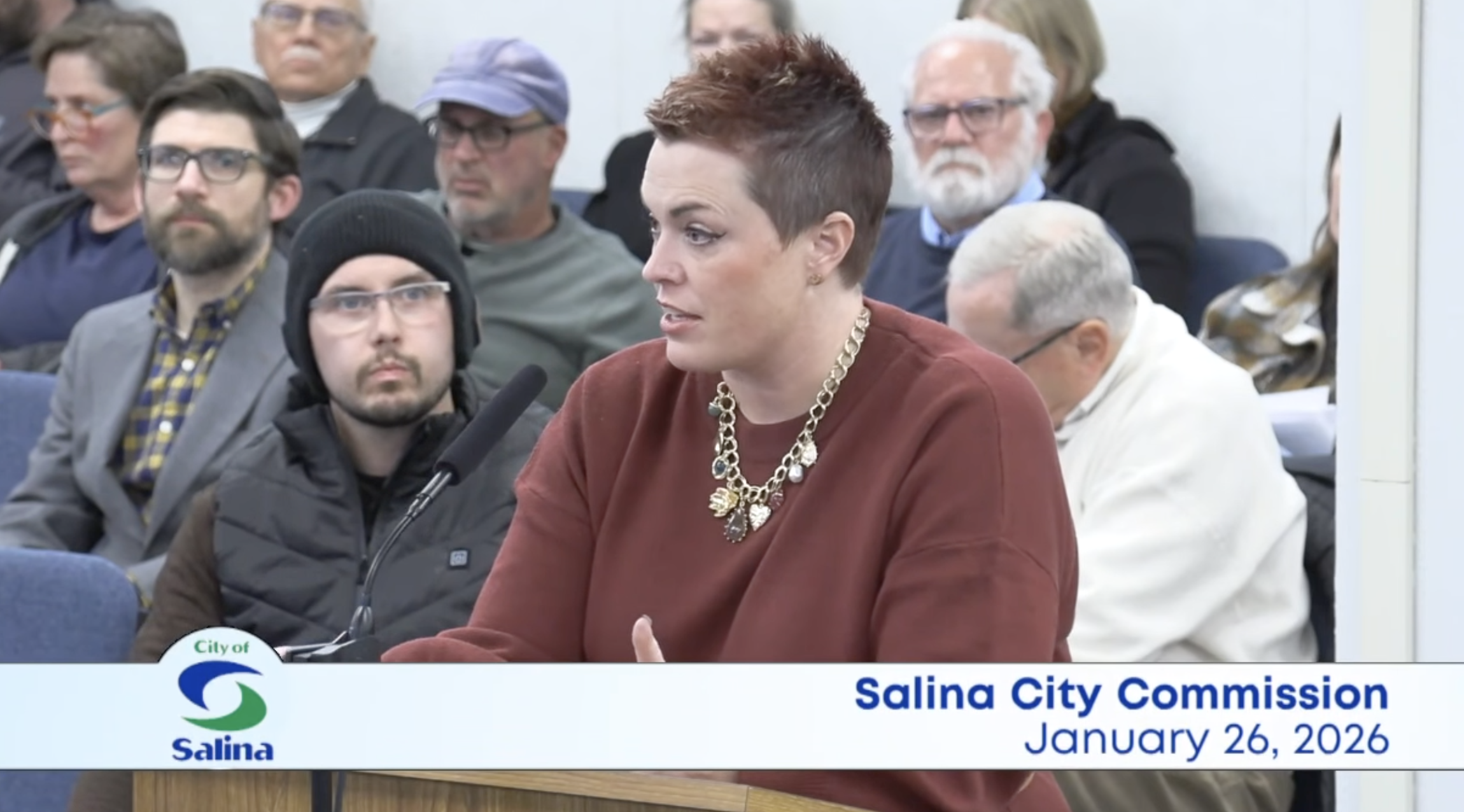
The Salina City Commission unanimously approved a one-year pilot program designed to support infill housing development in established neighborhoods, adding a new tool to the city’s long-term housing strategy.
The commission voted 5–0 to adopt Resolution No. 26-8331, establishing the CHDO Infill Housing Support Program and authorizing the City Manager or designee to administer the program.
City staff said the initiative supports the city’s Live Salina housing strategy, originally adopted in 2016 and updated in 2021 and 2022, which focuses on increasing housing options while maintaining neighborhood compatibility.
The program is limited to Community Housing Development Organizations (CHDOs), which are HUD-certified nonprofit developers required to meet federal standards for affordability, governance, and compliance. In Salina, that includes the Community Housing Development Corporation of Central Kansas, which has worked in the city for nearly a decade.
City staff described the program as a narrowly focused pilot that would reimburse CHDOs for specific costs related to fencing, landscaping, and buffering when infill projects trigger additional requirements under zoning and development regulations.
Under the program:
Funding is limited to $5,000 per project
Total annual funding is capped at $25,000
All funds are reimbursable only, with no upfront payments
Receipts must be submitted before reimbursement is issued
Staff said the goal is to support small-scale infill projects that add housing units while addressing concerns about neighborhood compatibility, particularly when additional units push a property into a multifamily classification that requires screening, landscaping, or buffering.
City officials said those features can help reduce conflicts when new units are added to long-established neighborhoods, even when zoning allows the increased density.
During commission discussion, Doug Rempp asked how properties developed by a CHDO are ultimately used, including whether they are sold or rented and how affordability is maintained.
Staff explained that CHDO-developed properties may be sold or rented, but any proceeds are reinvested back into the nonprofit’s housing programs rather than distributed as profit. Officials also noted that CHDO rental units are subject to income restrictions, often capped at 80 percent of area median income, with many units supported by housing vouchers.
City staff emphasized that the pilot structure limits financial risk. If a project does not qualify or receipts are not submitted, no reimbursement is issued, and projects are not halted or delayed.
During public comment, several residents spoke in support of the program, citing the need for additional housing units, particularly smaller and workforce-level housing. Others raised questions about zoning, density, and whether additional changes to allow more multifamily housing should be considered in the future.
Representatives from the Community Housing Development Corporation of Central Kansas provided additional background, stating the organization has completed nine housing projects over the past several years, is finishing its tenth, and currently manages 44 rental units, all of which are restricted to low- and moderate-income households. Some units are fully subsidized through federal housing vouchers, while others receive partial assistance based on tenant income.
The nonprofit also described a current infill project near North Fourth Street, where adding a new housing unit triggers requirements for fencing and landscaping that significantly increase project costs. Representatives said the pilot program would help offset those costs and make infill development more feasible.
Commissioners noted that the program is intentionally limited in scope and duration, allowing the city to evaluate its effectiveness before considering expansion or changes.
Following discussion, the commission approved the resolution unanimously.
City staff said the pilot program is intended to complement existing housing rehabilitation efforts funded through Federal Home Loan Bank and Community Development Block Grant (CDBG) programs, adding another targeted option to the city’s housing toolbox.
The program will run for one year, after which staff may return to the commission with findings and recommendations.
Receive Local Information Like This In Your Inbox
Stay informed with stories and updates from your community